Space belongs to
all of humanity.
"Those who don't know their history are doomed to repeat it."
It happened with the Americas, with Africa, with Asia — lands and resources claimed by whoever arrived first. Space was born different: it belongs to all of humanity. But the race to claim its resources is already testing that promise, just as the gap between countries widens faster than ever. The only way to colonize out there is by putting our world first."
First Our World is awareness. Of privilege, of scarcity, and of the opportunity we still have to not repeat the mistakes of the past. As humanity we've failed before — and we're still in time to not repeat it here.
Our world and its people must always come first. Always First Our World.
The urgency isn't abstract. These figures define the scenario we operate in today.
Where it all began
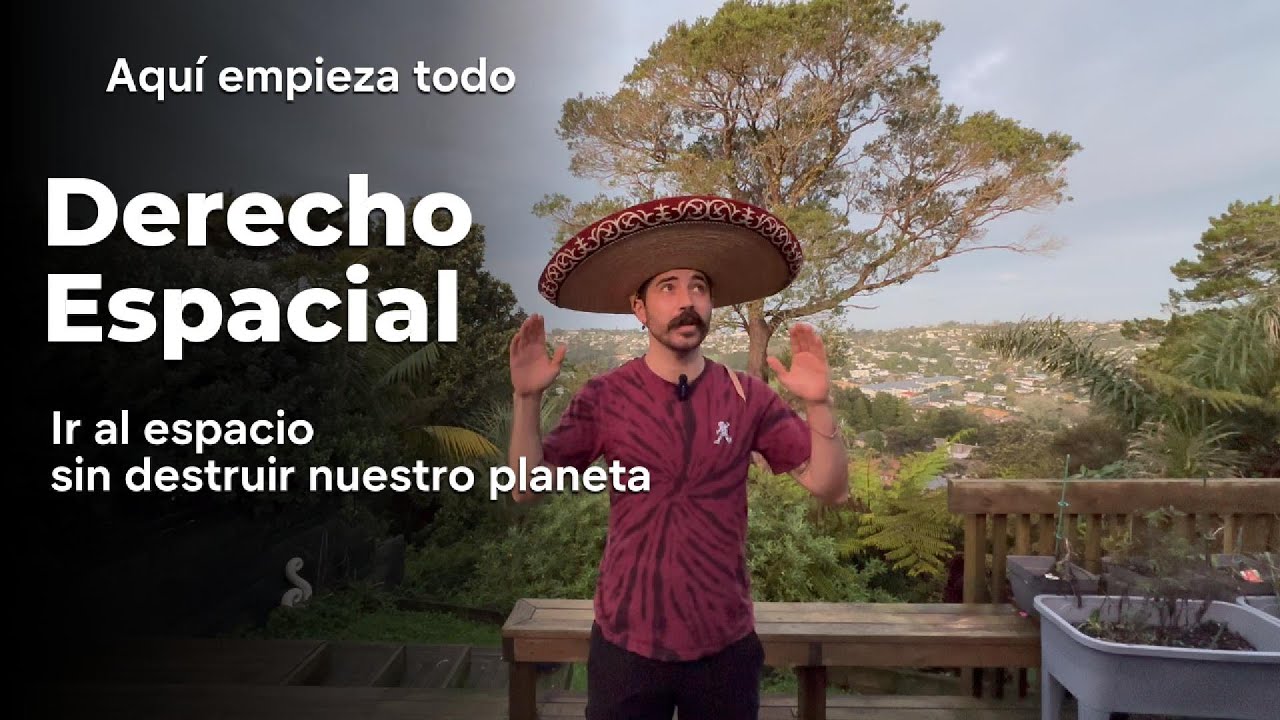
The three principles that guide us
These aren't ideas — they're commitments humanity already signed. The problem is few know them, and fewer demand them.
Benefit of all humanity
The exploration of space shall be carried out for the benefit of all countries, irrespective of their degree of economic or scientific development.
Exclusively peaceful use
The installation of weapons of mass destruction in orbit or on celestial bodies is prohibited. Space is for peaceful purposes only.
Sustainable development
States must avoid contaminating space and adverse changes to Earth's environment. What we build up there must remain livable for those who come after.
Recent news
Three ways into the topic
First Our World
Space awareness. A clear stance on how what happens up there should be done — and why most of the world isn't part of that conversation.
First Our World is awareness. Of privilege, of scarcity, and of the opportunity we still have to not repeat the mistakes of the past.
History has a pattern: someone discovers something enormous, a few claim it, and the rest of the world lives with the consequences for generations. It already happened with the continents, the oceans, oil. Outer space is the next chapter — and it's being written right now.
The difference this time is that we're still in time. Our world and its people must always come first.
It's not just a lack of information
Space law is voluntary
Treaties are opt-in. A country can sign them, ignore them, or withdraw with a year's notice. There's no body with real binding power.
Legislation hasn't been updated in decades
The Outer Space Treaty was signed in 1967. The industry went from state-run to operating fleets of thousands of private satellites. The rules never caught up.
Loopholes are created on purpose
The US, Luxembourg, Japan, and the UAE have already legislated to allow private ownership of space resources. They don't violate the letter of the treaty — but they do violate its spirit.
The gap widens in space too
Countries with technology don't share the benefits; developing countries can't compete. An industry that grows while reproducing the same old inequalities.
Three areas of action
Inform without jargon
We translate treaties and legislative debates into accessible language without losing rigor.
Demand it solve real problems
Space technology already purifies water, generates energy, and connects the world. We argue it should reach whoever needs it most.
Prove it can belong to everyone
International cooperation isn't altruism: it's the only technically viable option. The ISS already proved it.
Daniel
A lawyer trained in international law in Mexico with a specialization in space law in Spain. A profile built across two legal systems, two continents, and the conviction that space needs more voices — not just more technology.
Also a chef. Also a migrant. All three matter to understand why this project exists from where it does: not from an academic institution, but from the conviction that technical knowledge must reach further.
The channel is the entry point
On YouTube we translate space law into accessible video. Here we go deeper, cite sources, and connect the topics to each other.
▸ Go to the YouTube channel

On the channel
Each episode takes a real debate in space law or economics and breaks it down piece by piece, with sources and context — for experts and newcomers alike.
Topics
The concepts, treaties, and debates that form the foundation of everything we cover.
Topics in depth
Space traffic and debris
Over 140 million fragments orbit Earth. Kessler syndrome is already a real technical risk.
Space mining
Several countries have already legislated private resource ownership, using a loophole in the 1967 treaty.
The Artemis Accords
Over 50 countries have signed — but each signature is bilateral with NASA, not multilateral. Power concentrates.
ALCE and Latin America
The Latin American and Caribbean Space Agency has existed since 2024 with 11 countries. A historic opportunity.
Space tourism
Is a space tourist an "envoy of mankind"? Astronaut status raises questions with no clear answer.
International cooperation
The ISS proved cooperation is possible even between adversaries. Why isn't it the norm?
Basic glossary
Soft law
Non-binding international norms that states follow due to political pressure or convenience. Most of space law is this.
COPUOS
UN Committee on the Peaceful Uses of Outer Space. The main forum where space law norms are debated.
LEO orbit
Low Earth orbit, between 160 and 2,000 km. The ISS, Starlink, and most satellites operate here. The most congested zone.
Non-appropriation
Article II of the Outer Space Treaty: no state may claim sovereignty over celestial bodies. Several evade it by legislating over resources instead.
Kessler syndrome
A scenario where orbital object density is so high that every collision cascades into new fragments.
New Space
The current industry era, with mass entry of private players. It's changing the sector faster than the laws meant to regulate it.
News
We follow what's happening in the sector closely, because today's news is tomorrow's legislation.
This section is updated with verified news from sources such as UNOOSA, ESA, NASA, SpaceNews, and Space Foundation.
Resources
These are the sources our work is based on. Treaties, resolutions, official reports, and programs mentioned in each episode — straight from their origin.
UNOOSA
The UN body that supports COPUOS and maintains the registry of space objects.
unoosa.org →ESA
22 member states. Its "fair return" model is a reference for organizations like ALCE.
esa.int →ALCE
Operating since 2024, with 11 ratifying countries seeking a voice of their own in the space industry.
alce.space →Artemis Accords
Over 50 signatory countries — each signature is bilateral with NASA. They set principles for lunar exploration.
nasa.gov/artemis-accords →Space2030 Agenda
A UN roadmap to integrate space advances into the Sustainable Development Goals.
View agenda →Psyche mission
Mission to asteroid 16 Psyche, with resources estimated at $1 trillion. Reignites the debate on space resource rights.
NASA JPL →SpaceNews
The reference publication for space industry and policy news.
spacenews.com →Space Foundation
Annual report on the state of the global space economy.
spacefoundation.org →ESA Space Debris Office
Updated data on tracked space debris and collision risk.
esa.int/Space_Safety →More informed voices,
more space for everyone.
The cosmos shouldn't be the most ambitious project a few bought — it should be the biggest one humanity undertakes together. Write to us or follow us.